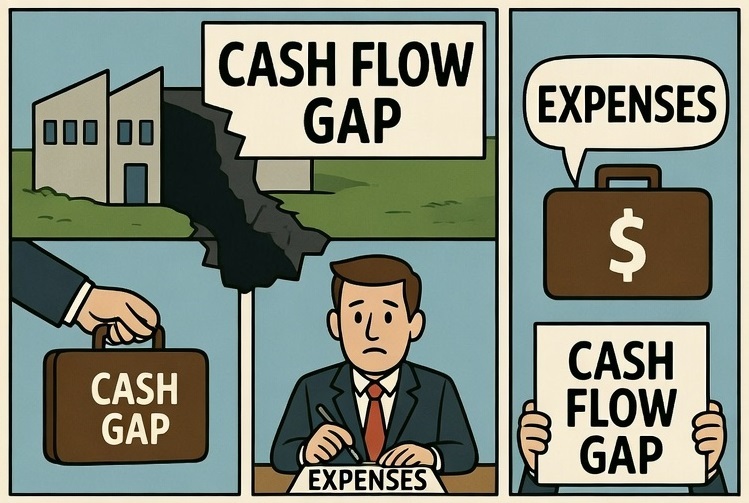
Now imagine you run a printing business. You receive a large order to print a batch of flyers for a city holiday. The client asks for 30-day payment terms, starting from the date the order is delivered.
You review your situation: there’s enough paper and materials in the warehouse, and the company has $200,000 in the bank. You agree to the terms and start the job.
A few days later, the accountant reminds you about a $100,000 equipment maintenance payment. You pay it, finish the order, and deliver the flyers to the client.
From that point, the 30-day payment clock starts.
You review your situation: there’s enough paper and materials in the warehouse, and the company has $200,000 in the bank. You agree to the terms and start the job.
A few days later, the accountant reminds you about a $100,000 equipment maintenance payment. You pay it, finish the order, and deliver the flyers to the client.
From that point, the 30-day payment clock starts.
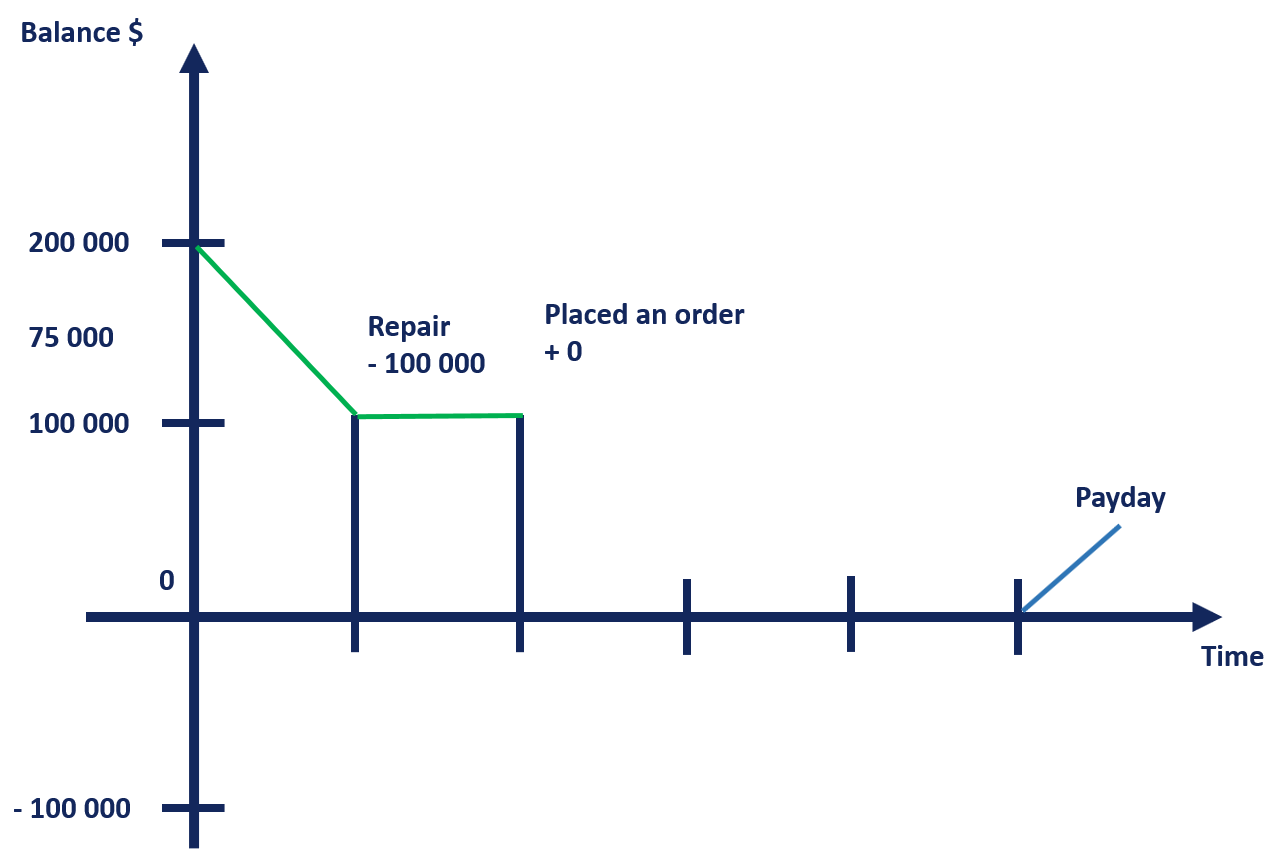
There are 28 days left until the client’s payment arrives, and the company has $100,000 in the bank.
A week later, it’s time to pay for materials that the supplier delivered a month ago. You pay $90,000 for paper, leaving just $10,000 in the account.
Another week passes, and according to the schedule, you need to pay employee wages and warehouse rent. There’s no cash left. You can’t delay payroll — that would result in penalties. So you borrow $30,000 from a friend, pay the employees, and ask the warehouse owner to wait for rent payment.
A week later, it’s time to pay for materials that the supplier delivered a month ago. You pay $90,000 for paper, leaving just $10,000 in the account.
Another week passes, and according to the schedule, you need to pay employee wages and warehouse rent. There’s no cash left. You can’t delay payroll — that would result in penalties. So you borrow $30,000 from a friend, pay the employees, and ask the warehouse owner to wait for rent payment.
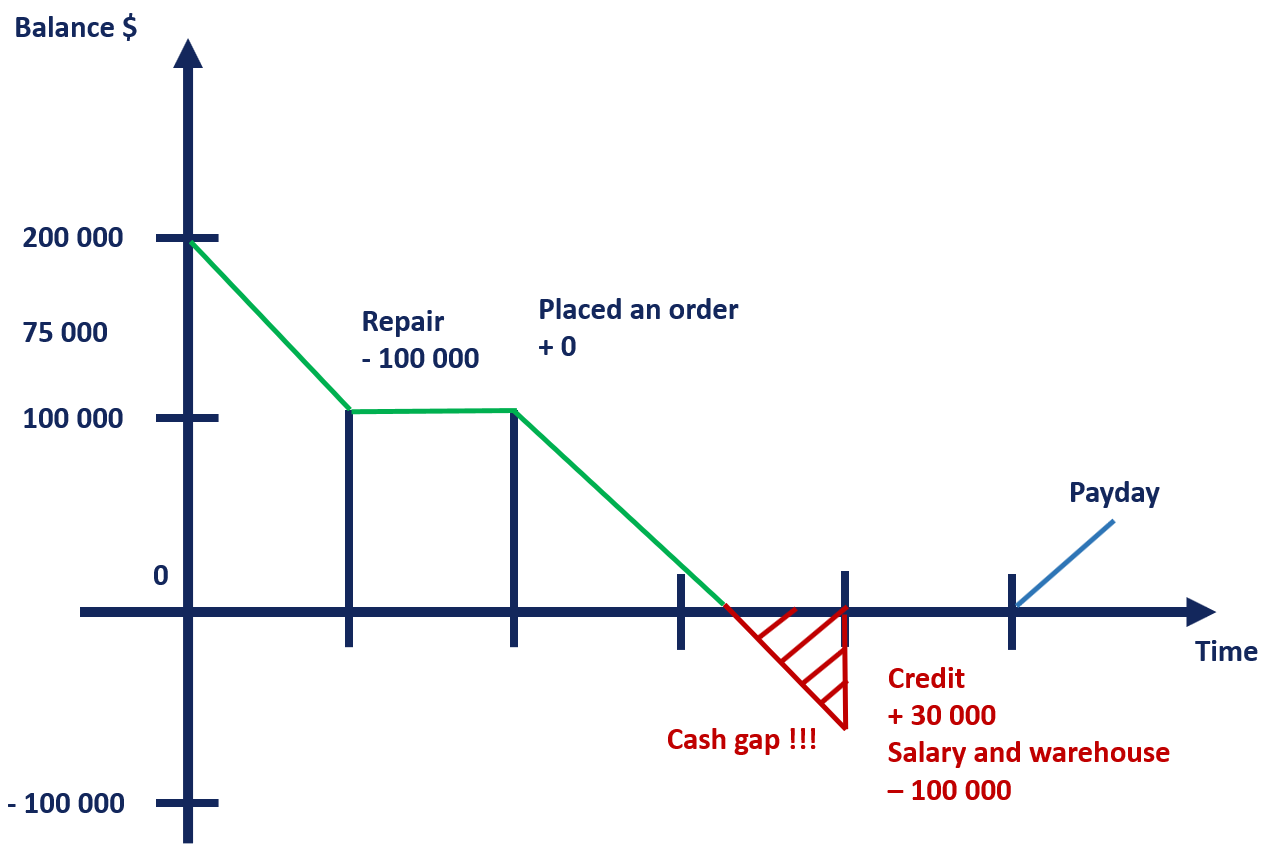
There are two weeks left until the client’s payment, and you’re already $60,000 in the red.
Finally, the client pays. You settle your debts and breathe a sigh of relief. The warehouse owner grumbles that this was the last time they’d wait, and your friend jokes that they should have charged you interest.
Finally, the client pays. You settle your debts and breathe a sigh of relief. The warehouse owner grumbles that this was the last time they’d wait, and your friend jokes that they should have charged you interest.
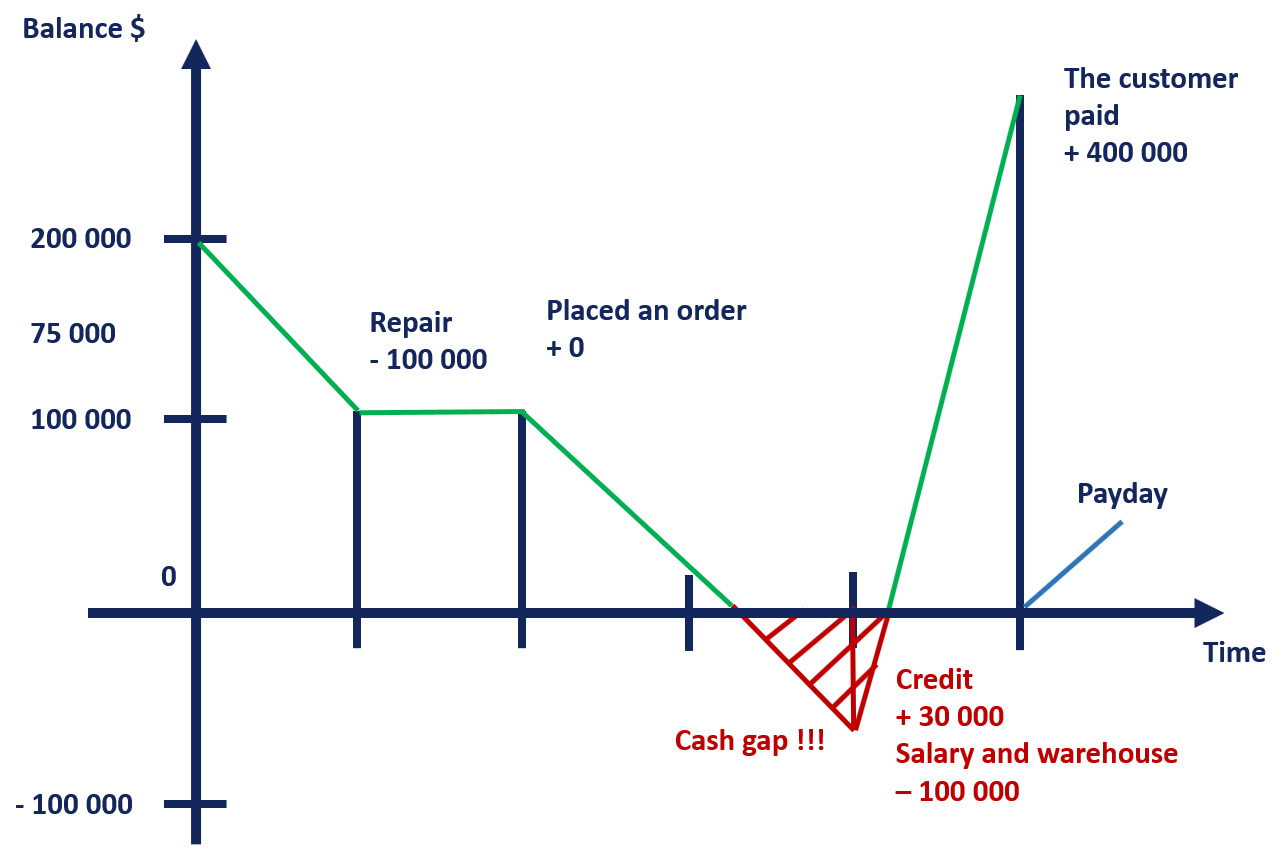
Despite the cash flow gap, the remaining balance is $340,000.
How to Manage Cash Flow Gaps in Manufacturing
To avoid cash flow gaps, you should use a cash flow calendar — a simple schedule where you list all expected cash inflows and outflows at least a month in advance. This allows you to see how much cash will be in the bank on any given day.
In the printing business example, a cash flow calendar would have clearly shown that offering the client 30-day payment terms would leave the company without cash for two weeks. In that case, the better solution would have been to negotiate shorter payment terms with the client and ask the supplier for longer payment terms.
To avoid cash flow gaps, you should use a cash flow calendar — a simple schedule where you list all expected cash inflows and outflows at least a month in advance. This allows you to see how much cash will be in the bank on any given day.
In the printing business example, a cash flow calendar would have clearly shown that offering the client 30-day payment terms would leave the company without cash for two weeks. In that case, the better solution would have been to negotiate shorter payment terms with the client and ask the supplier for longer payment terms.