
Imagine you run a business that produces advertising videos. A client comes to you and wants to order five videos. You price the project at $250,000. The client agrees to pay a 30% upfront deposit, with the remaining balance due after the project is completed.
The deal looks attractive, so you move forward with the project. At the start of the work, the company has $150,000 in its bank account.
The deal looks attractive, so you move forward with the project. At the start of the work, the company has $150,000 in its bank account.
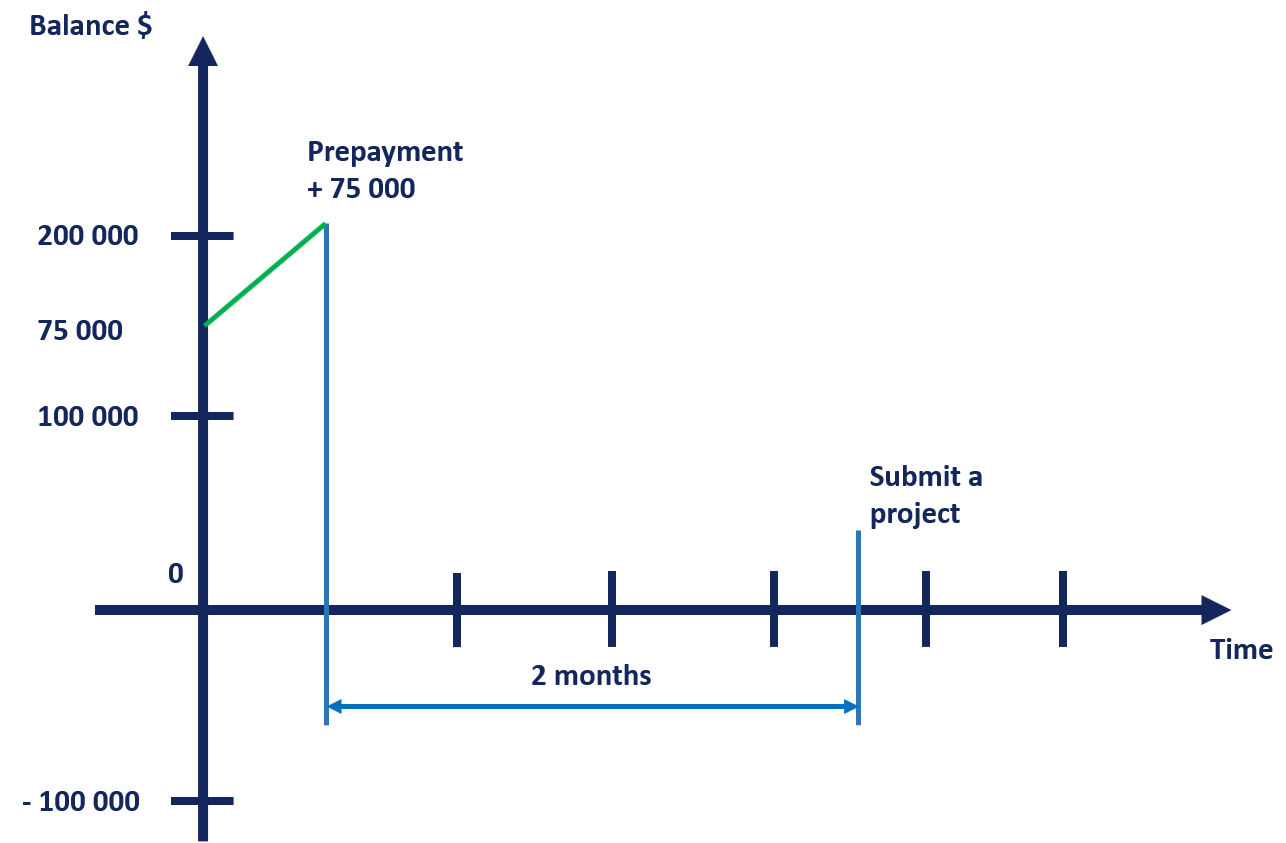
So at the start, you have $150,000 in the bank plus a $75,000 upfront payment from the client. That gives you $225,000 to cover expenses until the project is completed.
As the work progresses, regular expenses come due:
— $50,000 in wages for the videographer and editor,
— $30,000 for office rent.
You set aside the same amount for the next month and take the remaining money for yourself.
A month later, you’ve completed 3 out of the 5 videos. You pay salaries and office rent again. After that, the bank account is empty.
But this is still not a cash flow gap.
As the work progresses, regular expenses come due:
— $50,000 in wages for the videographer and editor,
— $30,000 for office rent.
You set aside the same amount for the next month and take the remaining money for yourself.
A month later, you’ve completed 3 out of the 5 videos. You pay salaries and office rent again. After that, the bank account is empty.
But this is still not a cash flow gap.
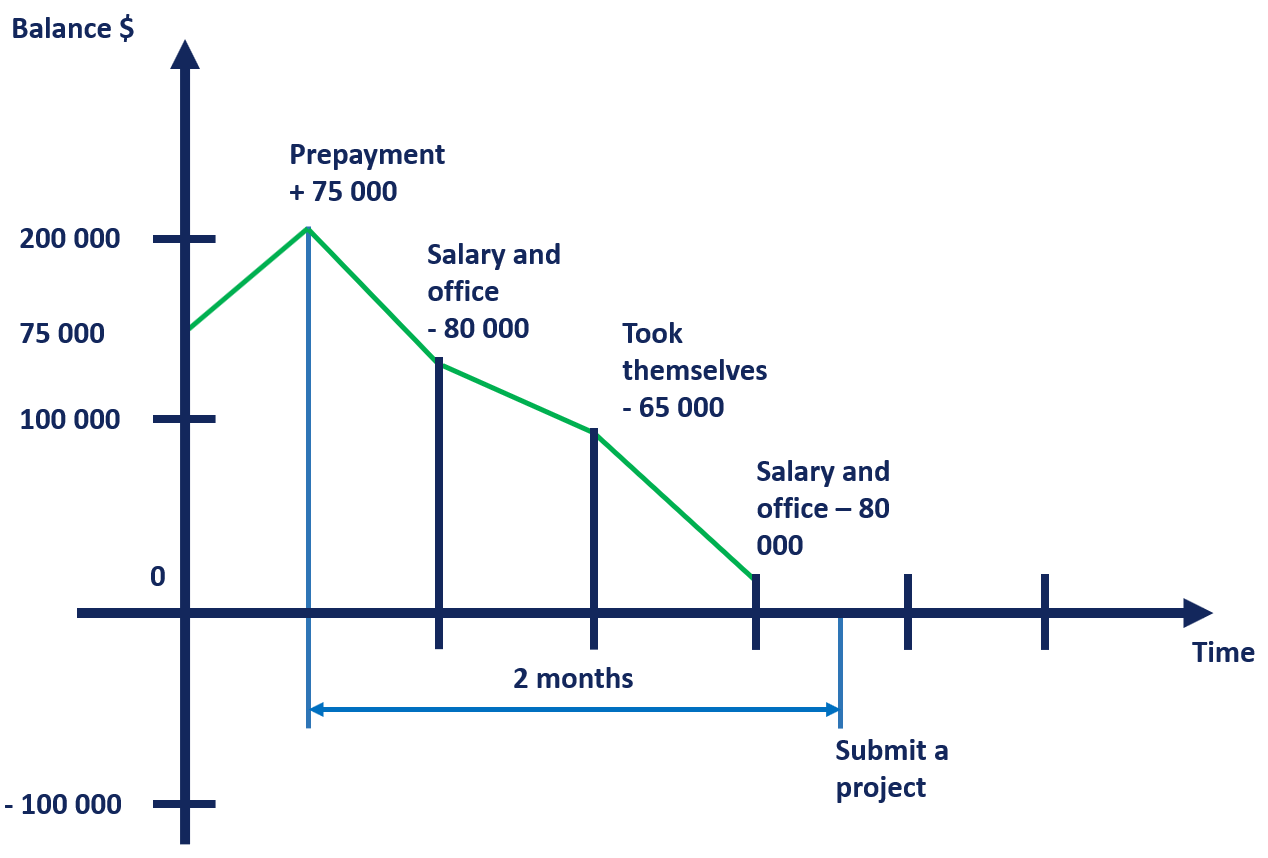
There’s just over a week left until the project is supposed to be finished — and the company’s bank balance is $0.
On top of that, the client is unhappy with the last two videos. They refuse to approve them and ask for reshoots. The project gets delayed, but the expenses don’t stop — you still need to pay salaries and cover office rent.
This is what a real cash flow gap looks like.
On top of that, the client is unhappy with the last two videos. They refuse to approve them and ask for reshoots. The project gets delayed, but the expenses don’t stop — you still need to pay salaries and cover office rent.
This is what a real cash flow gap looks like.
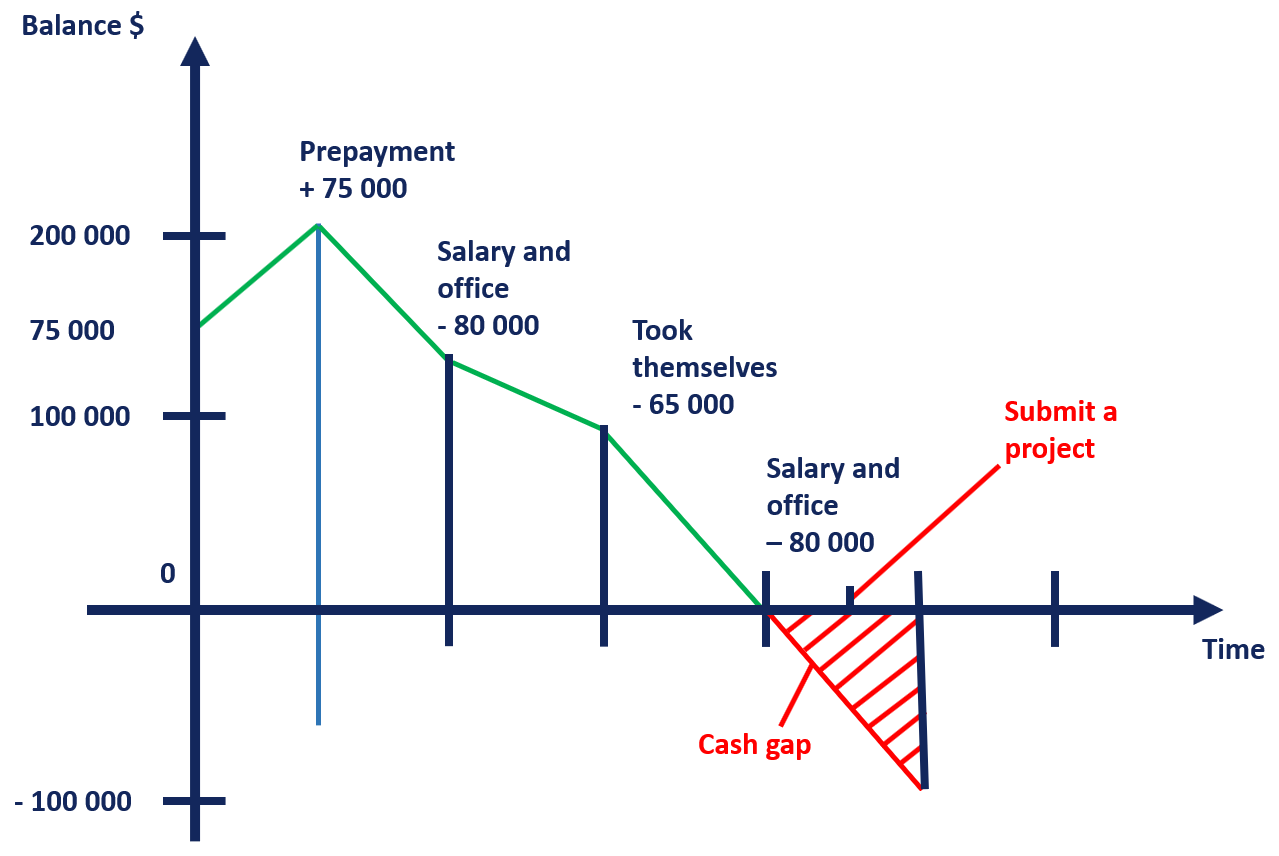
The project still isn’t finished, and you’re $80,000 in debt.
You’re under serious stress: you convince the videographer and editor to push through and finish the work, put together a strong final presentation for the client, and deliver the last videos.
The client pays the remaining balance. You pay salaries and cover office rent. There’s finally money in the bank again.
You’re under serious stress: you convince the videographer and editor to push through and finish the work, put together a strong final presentation for the client, and deliver the last videos.
The client pays the remaining balance. You pay salaries and cover office rent. There’s finally money in the bank again.
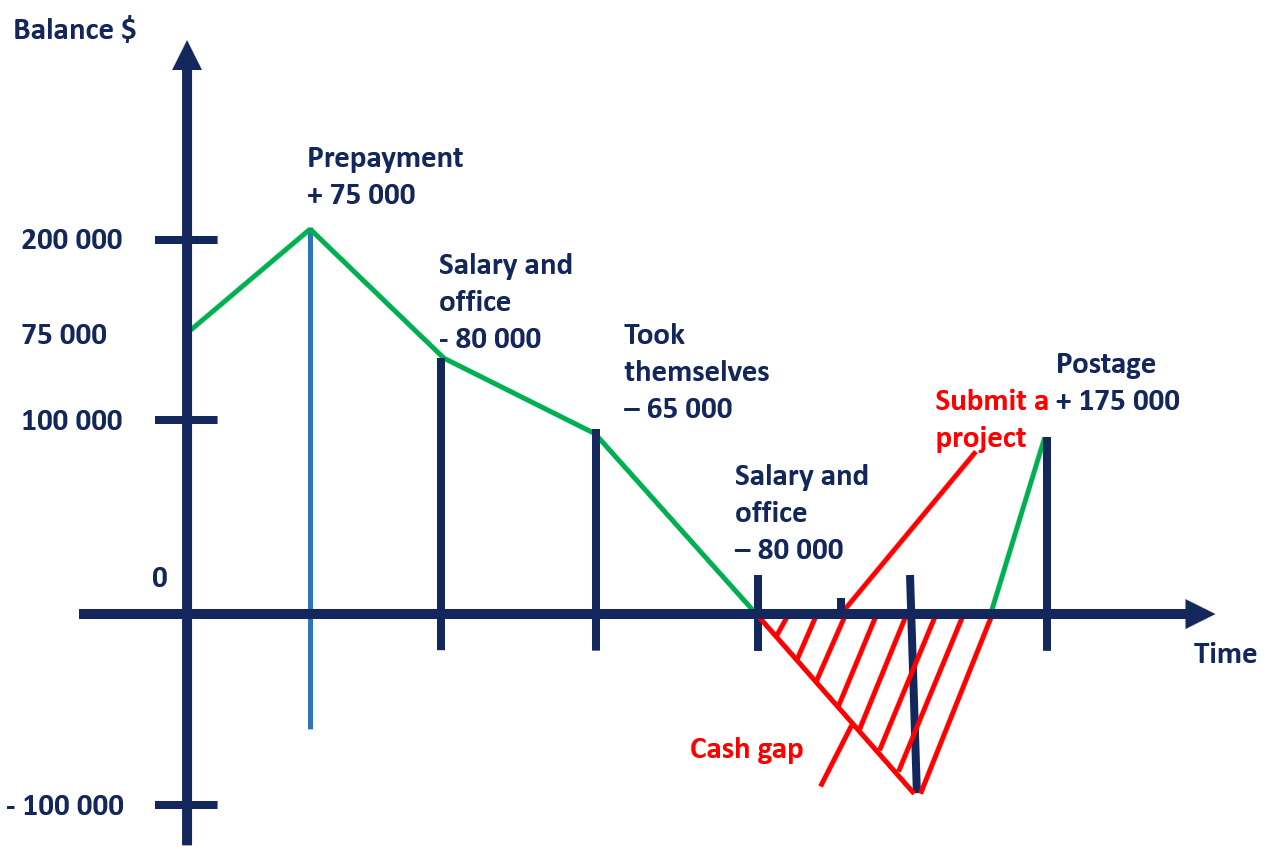
The project is finished. The company has $90,000 left in the bank.
If you run a project-based business, it’s critical to closely manage timelines and structure your work into short, clearly paid stages. Each stage should be formally defined in the contract, with strict deadlines.
A project planned for two months can be profitable. Stretch that same project to four months, and it can quickly turn into a loss. Fixed costs like salaries and office rent slowly drain all the profit.
If you run a project-based business, it’s critical to closely manage timelines and structure your work into short, clearly paid stages. Each stage should be formally defined in the contract, with strict deadlines.
A project planned for two months can be profitable. Stretch that same project to four months, and it can quickly turn into a loss. Fixed costs like salaries and office rent slowly drain all the profit.