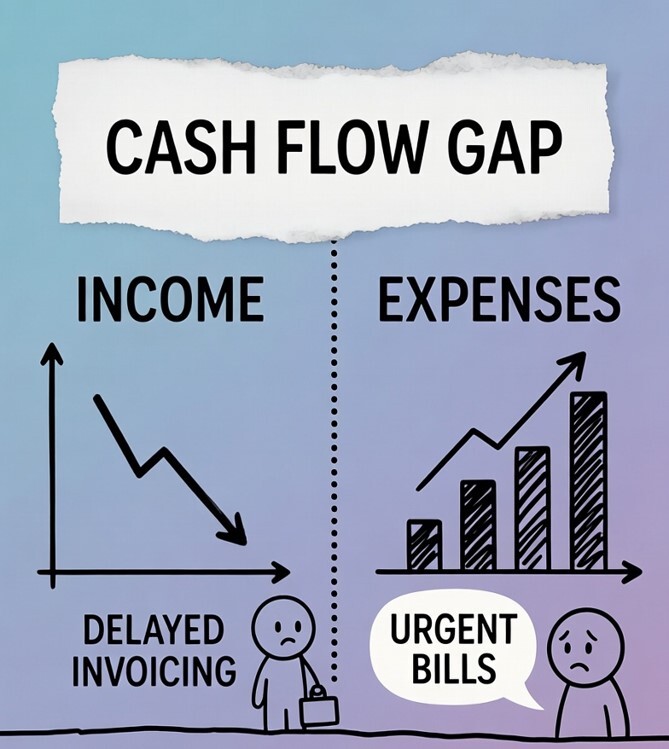
In this article, we’ll break down the main reasons businesses face cash flow gaps across different industries and explain what you can do to fix them.
This isn’t an introduction to business finance. It’s meant for owners and managers who already have an established operation — you have employees, suppliers, bank loans or outstanding payables. You may also offer payment terms to your customers, which means you’re dealing with accounts receivable.
If you’re running a functioning business but still find yourself short on cash from time to time, this article is for you.
This isn’t an introduction to business finance. It’s meant for owners and managers who already have an established operation — you have employees, suppliers, bank loans or outstanding payables. You may also offer payment terms to your customers, which means you’re dealing with accounts receivable.
If you’re running a functioning business but still find yourself short on cash from time to time, this article is for you.
What a Cash Flow Gap Is — and How It Differs from a Real Cash Shortage
A cash flow gap happens when a business is profitable on paper, but the owner or manager miscalculates the timing of incoming and outgoing payments. As a result, the company temporarily runs out of cash even though the business itself is healthy. This situation is fixable with proper planning and adjustments.
A cash shortage, on the other hand, occurs when the business is not profitable and survives only because of customer prepayments or delayed payments to suppliers. Debt keeps building up, and if new orders slow down, the business can quickly slide into bankruptcy. That’s a much more serious issue — one we’ll cover separately.
A cash flow gap happens when a business is profitable on paper, but the owner or manager miscalculates the timing of incoming and outgoing payments. As a result, the company temporarily runs out of cash even though the business itself is healthy. This situation is fixable with proper planning and adjustments.
A cash shortage, on the other hand, occurs when the business is not profitable and survives only because of customer prepayments or delayed payments to suppliers. Debt keeps building up, and if new orders slow down, the business can quickly slide into bankruptcy. That’s a much more serious issue — one we’ll cover separately.
How to calculate the cash gap: formula and calculation example
A simple formula will help you determine if there is a cash gap in your business:
Balance at the beginning of the period + receipts during the period – disposals during the period
The period is usually a month. If the balance at the end of the month is negative, it means that there is a cash gap in the business. Let's look at an example:
A simple formula will help you determine if there is a cash gap in your business:
Balance at the beginning of the period + receipts during the period – disposals during the period
The period is usually a month. If the balance at the end of the month is negative, it means that there is a cash gap in the business. Let's look at an example:
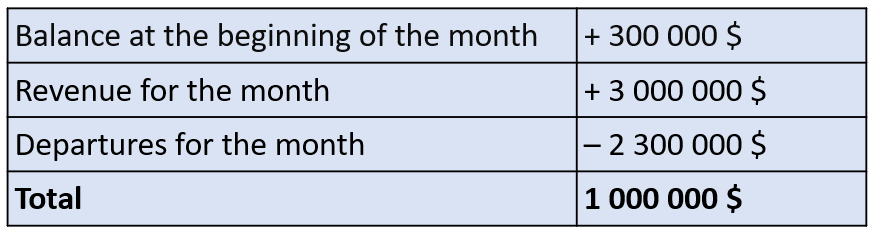
In this example, the result is positive, and there is no cash gap. But here is another example, this time with a negative result ↓
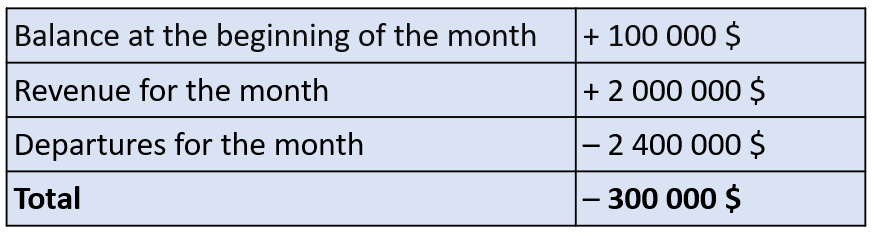
It’s important to understand that here we’re talking specifically about cash inflows and cash outflows — how much money actually comes into the bank account and how much goes out. Profit is tracked using a different tool: the income statement.
You should monitor cash movements using this simple formula regularly — every three days, once a week, or even daily when things are tight. That’s how you catch a potential cash flow gap before it becomes a problem.
A cash flow calendar can help you stay on top of this — but that’s a topic for another article.
You should monitor cash movements using this simple formula regularly — every three days, once a week, or even daily when things are tight. That’s how you catch a potential cash flow gap before it becomes a problem.
A cash flow calendar can help you stay on top of this — but that’s a topic for another article.
Common Causes of Cash Flow Deficits
The primary cause of cash flow deficits is poor planning—specifically, improperly managing the timing of cash inflows and outflows. This is the general picture. However, the specific causes vary by industry. Here are some of the most common:
In services
Long-term projects and delayed invoicing often create shortfalls. A company pays contractors, employees, or suppliers now, but customers only pay weeks or months later.
In manufacturing
Cash flow problems often arise from poor expense planning. A manufacturer must pay for labor, materials, and components before a customer pays the full order amount.
In retail and wholesale
Small increases in expenses can quietly drain cash. Perhaps marketing expenses are higher than expected, inventory is purchased at a higher price than usual, or retail prices are not adjusted in a timely manner. These gradually increasing expenses slowly consume all incoming cash.
In the food service industry (restaurants, cafes, catering)
A common problem is a sudden increase in food waste or spoilage. For example, a chef may exceed established portion sizes, leading to unplanned ingredient expenditures. Or the owner may over-budget, failing to account for normal waste levels.
In future articles, we'll take a closer look at each industry, with examples demonstrating how cash flow shortfalls arise in real businesses.
The primary cause of cash flow deficits is poor planning—specifically, improperly managing the timing of cash inflows and outflows. This is the general picture. However, the specific causes vary by industry. Here are some of the most common:
In services
Long-term projects and delayed invoicing often create shortfalls. A company pays contractors, employees, or suppliers now, but customers only pay weeks or months later.
In manufacturing
Cash flow problems often arise from poor expense planning. A manufacturer must pay for labor, materials, and components before a customer pays the full order amount.
In retail and wholesale
Small increases in expenses can quietly drain cash. Perhaps marketing expenses are higher than expected, inventory is purchased at a higher price than usual, or retail prices are not adjusted in a timely manner. These gradually increasing expenses slowly consume all incoming cash.
In the food service industry (restaurants, cafes, catering)
A common problem is a sudden increase in food waste or spoilage. For example, a chef may exceed established portion sizes, leading to unplanned ingredient expenditures. Or the owner may over-budget, failing to account for normal waste levels.
In future articles, we'll take a closer look at each industry, with examples demonstrating how cash flow shortfalls arise in real businesses.
Cash Flow Gap - Cash Shortage in Business: How to Overcome It
One of the most common reasons companies run into cash flow trouble is simple: the owner pulls too much money out of the business too early. It happens all the time, especially with newer entrepreneurs. They sign a bunch of contracts, receive upfront payments… and then start spending that money on personal wants — new MacBooks, new iPhones, whatever feels “earned.”
Then the moment comes to pay contractors, vendors, or suppliers — and the cash just isn’t there. If an unhappy client also asks for a refund at the same time, things get even worse.
As the business takes on more short-term debt to cover gaps, a temporary cash flow problem slowly turns into a full-on cash shortage. Before long, the company finds itself sliding into a debt spiral.
In separate articles, I discuss healthier ways to withdraw funds from a business, including:
One of the most common reasons companies run into cash flow trouble is simple: the owner pulls too much money out of the business too early. It happens all the time, especially with newer entrepreneurs. They sign a bunch of contracts, receive upfront payments… and then start spending that money on personal wants — new MacBooks, new iPhones, whatever feels “earned.”
Then the moment comes to pay contractors, vendors, or suppliers — and the cash just isn’t there. If an unhappy client also asks for a refund at the same time, things get even worse.
As the business takes on more short-term debt to cover gaps, a temporary cash flow problem slowly turns into a full-on cash shortage. Before long, the company finds itself sliding into a debt spiral.
In separate articles, I discuss healthier ways to withdraw funds from a business, including:
- How to withdraw money from your business responsibly
- Dividend payouts for business owners
- Weekly dividend withdrawals: how to set it up
- Profit allocation systems and how to structure them
How to Fix a Cash Flow Gap When It’s Already Happening
If a cash flow gap has already hit — or you clearly see it coming — your main goal is simple: increase cash coming in and reduce cash going out. Here are some practical ways to do that:
Limit owner withdrawals.
Pause or reduce dividend payouts to avoid making the gap even worse.
Shift payment dates.
Ask suppliers for extended terms, or work with executives to postpone bonuses or other large payouts. The idea is to keep more cash inside the business temporarily.
Ask customers to pay sooner.
Offer a discount or another perk in exchange for early payment. This helps speed up cash inflows.
Reduce outgoing payments.
Negotiate installment plans or smaller, split payments with vendors to ease short-term pressure.
Pause inventory purchases.
If you’re already in a cash flow gap, don’t stock up “for the future.” Hold off on buying new inventory until cash stabilizes.
If a cash flow gap has already hit — or you clearly see it coming — your main goal is simple: increase cash coming in and reduce cash going out. Here are some practical ways to do that:
Limit owner withdrawals.
Pause or reduce dividend payouts to avoid making the gap even worse.
Shift payment dates.
Ask suppliers for extended terms, or work with executives to postpone bonuses or other large payouts. The idea is to keep more cash inside the business temporarily.
Ask customers to pay sooner.
Offer a discount or another perk in exchange for early payment. This helps speed up cash inflows.
Reduce outgoing payments.
Negotiate installment plans or smaller, split payments with vendors to ease short-term pressure.
Pause inventory purchases.
If you’re already in a cash flow gap, don’t stock up “for the future.” Hold off on buying new inventory until cash stabilizes.