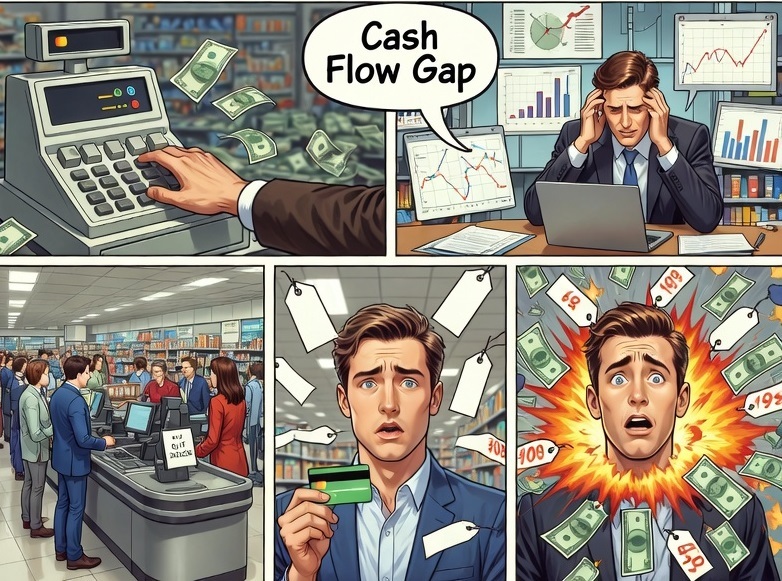
Imagine you run an online store selling gas boilers. The heating season starts, and suddenly you’re flooded with leads, sales, and incoming cash.
In the middle of all this activity, you don’t notice that your ad cost per click has been creeping up. As a result, instead of the planned $200,000, you end up spending $500,000 on advertising. It doesn’t seem like a big deal — there’s plenty of money coming in.
Riding the wave of success, you stock up on more inventory and, at the same time, treat yourself to an expensive purchase worth $200,000.
In the middle of all this activity, you don’t notice that your ad cost per click has been creeping up. As a result, instead of the planned $200,000, you end up spending $500,000 on advertising. It doesn’t seem like a big deal — there’s plenty of money coming in.
Riding the wave of success, you stock up on more inventory and, at the same time, treat yourself to an expensive purchase worth $200,000.
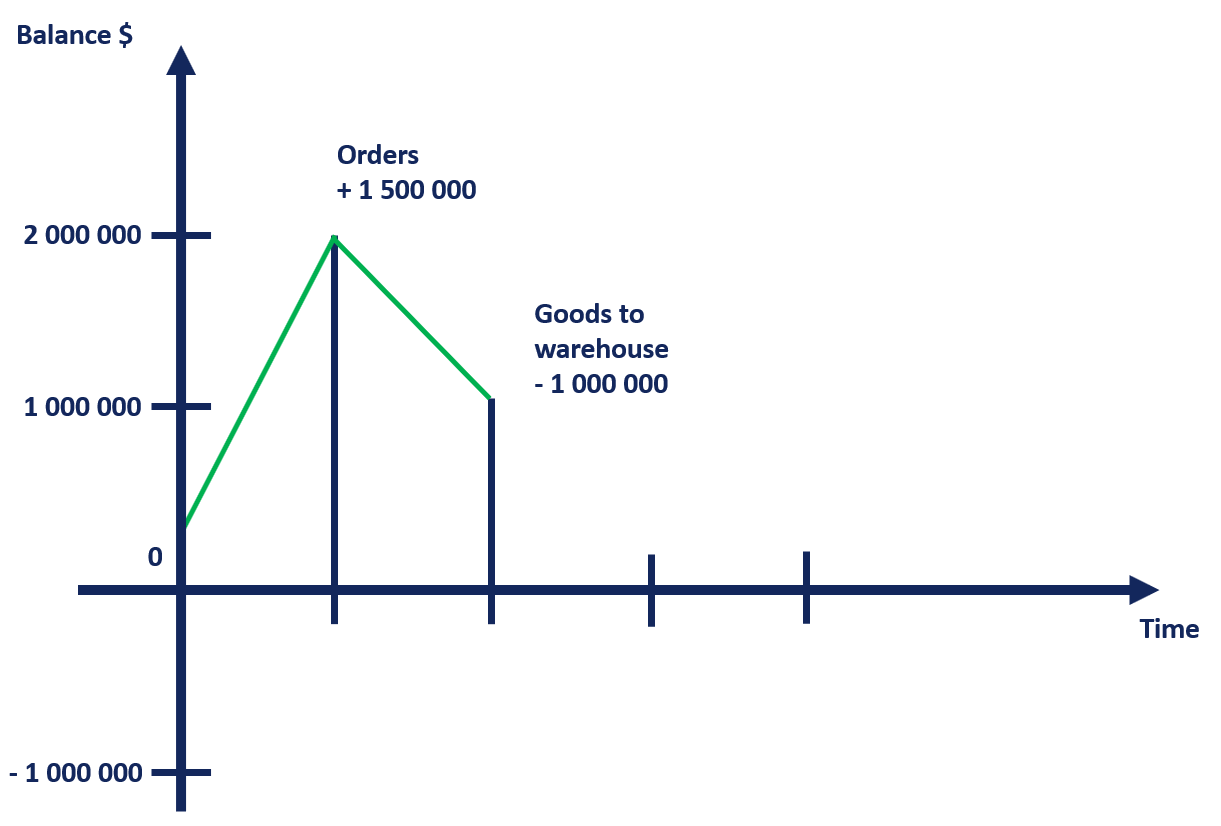
There’s $1,000,000 in the bank, and everything seems fine.
Orders keep coming in, and we keep spending money — paying Google more for ads than we originally planned. Eventually, the season ends, cash inflows drop, and we start paying suppliers. And that’s when the money suddenly runs out.
Orders keep coming in, and we keep spending money — paying Google more for ads than we originally planned. Eventually, the season ends, cash inflows drop, and we start paying suppliers. And that’s when the money suddenly runs out.
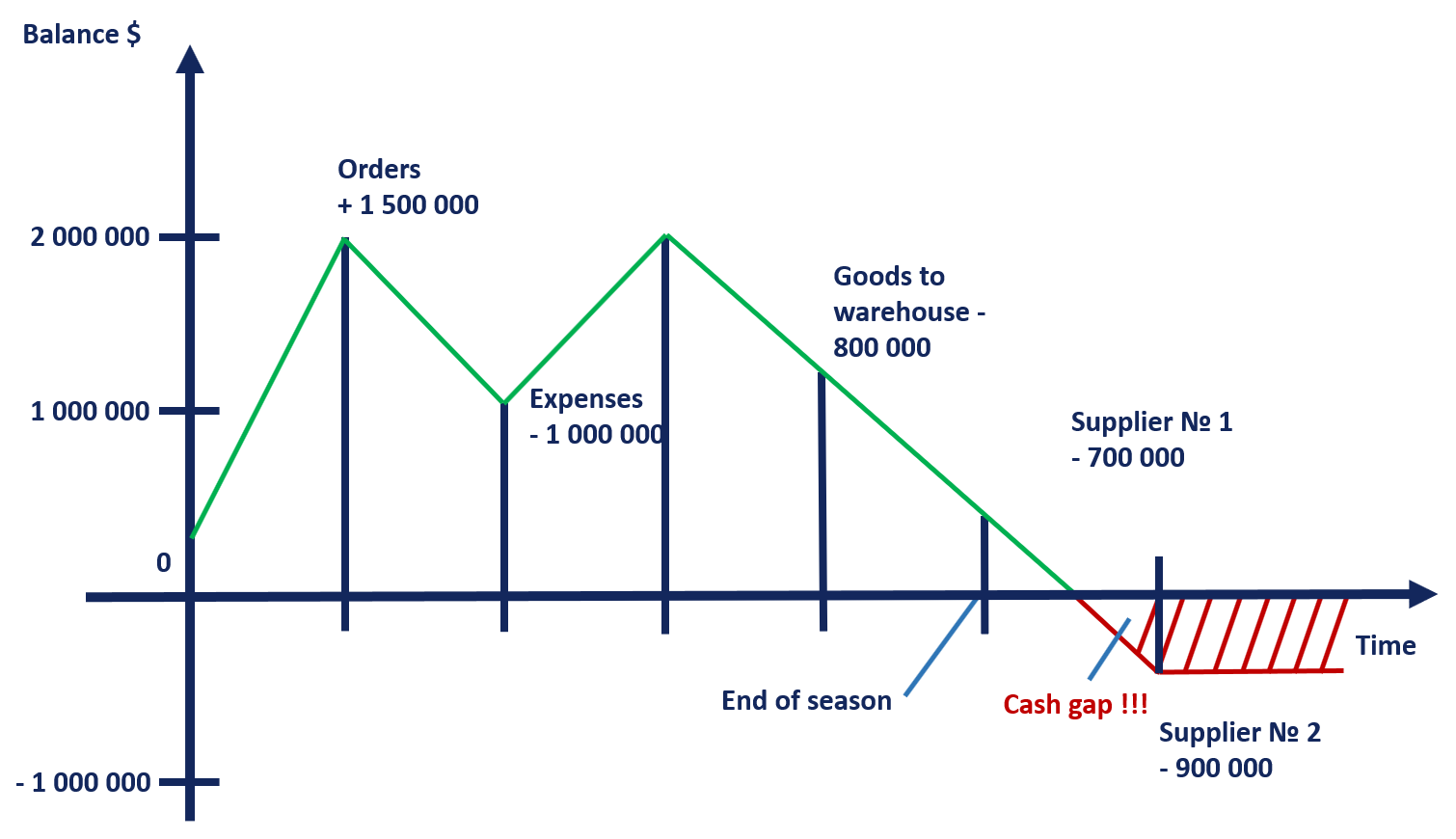
The season is over, and the business is $400,000 in the red.
The cash flow gap happened because over two months we spent $600,000 more on advertising than planned. Instead of ending the season with a profit, we ended up with a loss.
The cash flow gap happened because over two months we spent $600,000 more on advertising than planned. Instead of ending the season with a profit, we ended up with a loss.
How to Avoid Cash Flow Gaps in Retail
Before the sales season starts, create a revenue and expense budget. This is a simple spreadsheet where you list all expected costs by category so you can track them throughout the season. Each expense should have a clear owner responsible for staying within budget.
During the season, keep a close eye on the numbers — review the budget at least once a week. If expenses start exceeding the plan, raise a red flag and take action immediately.
Until the season is over, avoid unplanned spending. Measure success not by how much cash is in the bank, but by whether net profit is growing or shrinking.
Once demand slows down, settle payments with suppliers, pay employee wages, calmly calculate the final profit, and distribute earnings among partners.
Before the sales season starts, create a revenue and expense budget. This is a simple spreadsheet where you list all expected costs by category so you can track them throughout the season. Each expense should have a clear owner responsible for staying within budget.
During the season, keep a close eye on the numbers — review the budget at least once a week. If expenses start exceeding the plan, raise a red flag and take action immediately.
Until the season is over, avoid unplanned spending. Measure success not by how much cash is in the bank, but by whether net profit is growing or shrinking.
Once demand slows down, settle payments with suppliers, pay employee wages, calmly calculate the final profit, and distribute earnings among partners.