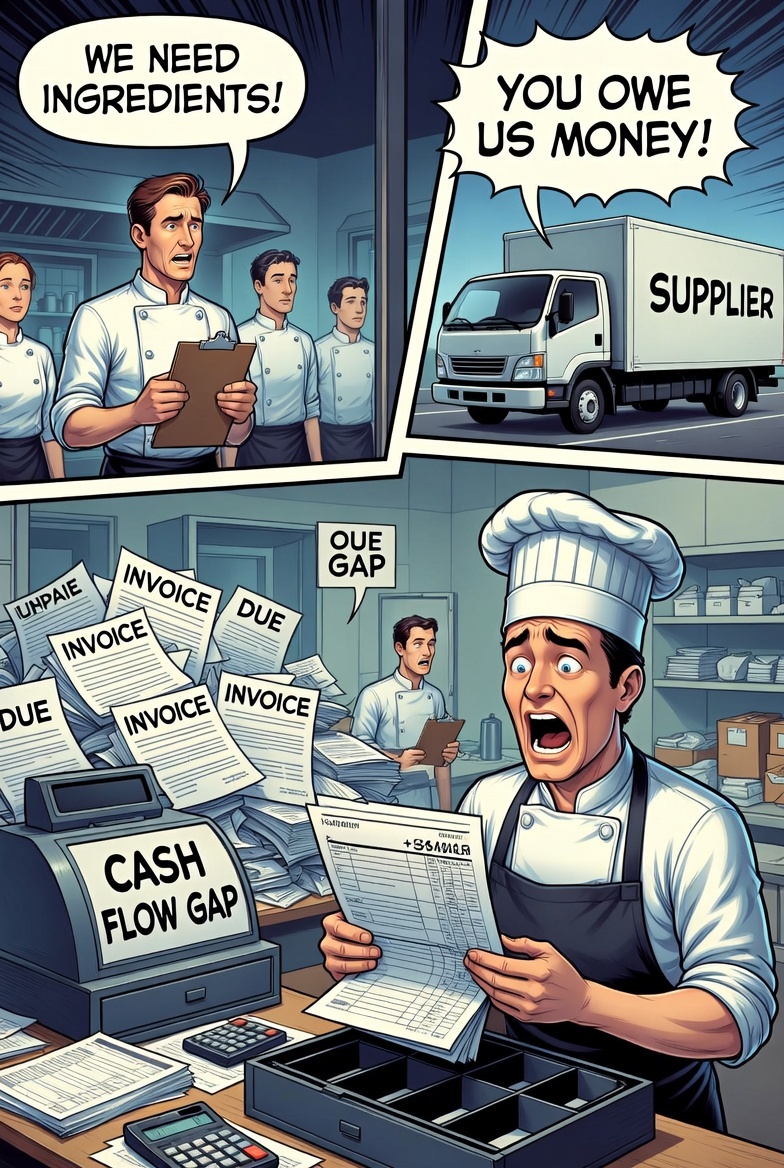
You run a small café. On average, the business generates $150 000 in net profit per month. Throughout the year, you regularly write off expired food — about $60,000 per month, and these losses are already included in your budget.
Each month, you pay yourself $150 000 from the profit. You also pay salaries to your staff — $50 000 each to the cook and the server.
Each month, you pay yourself $150 000 from the profit. You also pay salaries to your staff — $50 000 each to the cook and the server.
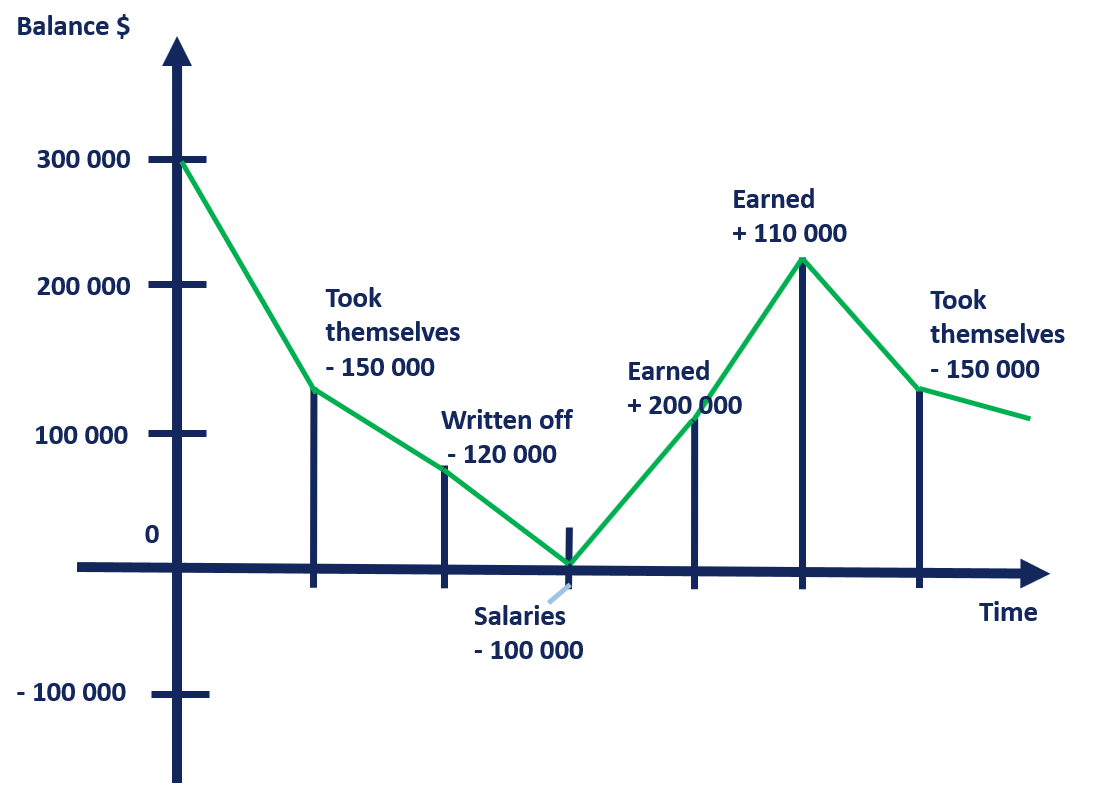
Café revenue and expense model
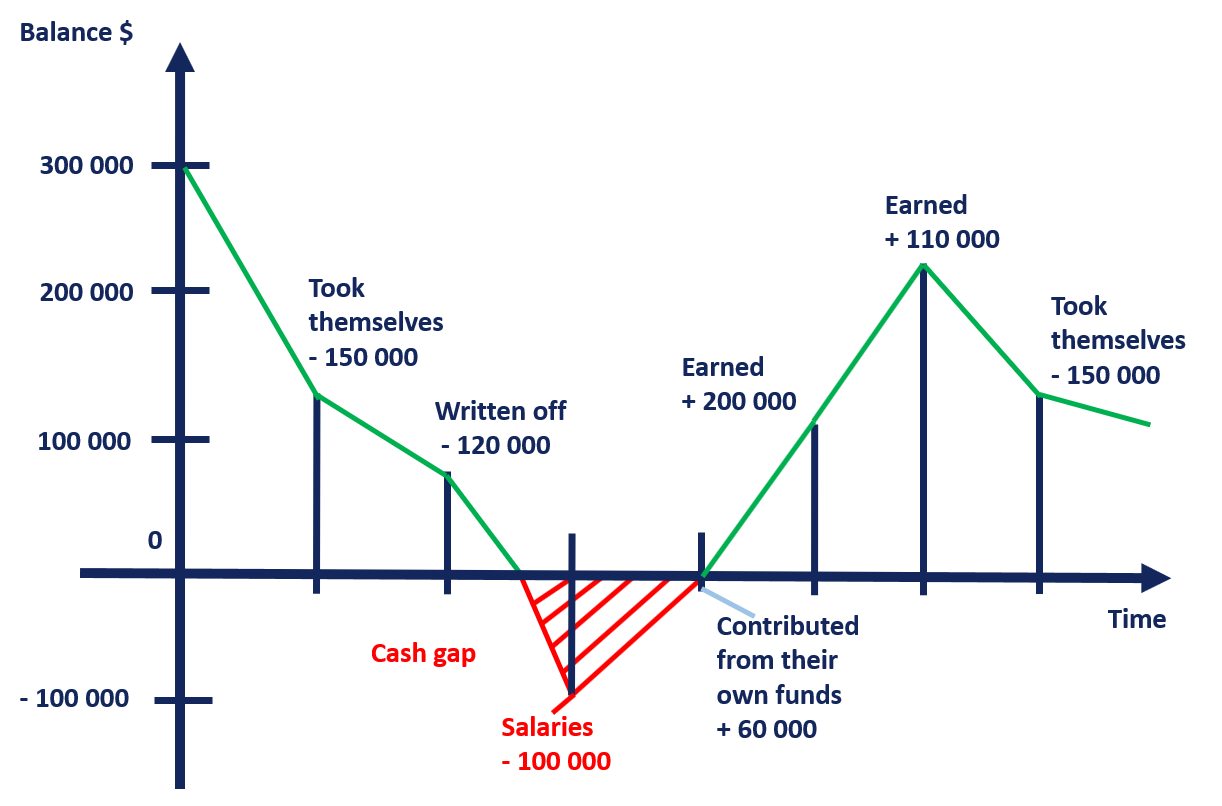
Let’s imagine this situation. In the middle of the month, as usual, you paid yourself $150 000, paid staff salaries, and continued operating as normal.
By the end of the month, you discovered that the business was down $60 000. To cover the next payroll, you had to put in personal money and figure out what went wrong.
It turned out that the cook wrote off twice as much food as usual, and you only found out about it at the end of the month.
How to Control Cash Flow Gaps in Restaurants and Cafés
When building your financial model, always keep a cash buffer for unexpected situations — equipment breakdowns, food waste, or staff errors.
Monitor write-offs closely. Assign a responsible employee and check inventory at least once a week. Video surveillance can also help reduce losses.
It’s better to pay extra for proper control than to discover a cash flow gap and unexpected debt at the end of the month.
When building your financial model, always keep a cash buffer for unexpected situations — equipment breakdowns, food waste, or staff errors.
Monitor write-offs closely. Assign a responsible employee and check inventory at least once a week. Video surveillance can also help reduce losses.
It’s better to pay extra for proper control than to discover a cash flow gap and unexpected debt at the end of the month.